Introduction
Sudden Cardiac Arrest (SCA) is a life-threatening emergency that can occur to anyone, anytime, and anywhere, without warning. According to the American Heart Association (AHA, 2023), immediate CPR when performed by bystanders can double or triple a person's chance of survival after cardiac arrest. Early CPR and rapid use of an AED can significantly increase the chance of survival rates to 50-70% in cardiac arrest. Immediate response using an Automated External Defibrillator (AED) can significantly increase a person’s chance of survival.
HAPSA Nepal, with the generous support of the America Nepal Medical Foundation (ANMF), has initiated the AED Installation Project to improve emergency preparedness and save lives in public spaces in Nepal.
This initiative focuses on installing AED devices in strategic locations and providing training to relevant personnel to ensure rapid response during cardiac emergencies.
What is an AED?
An Automated External Defibrillator (AED) is a portable medical device that helps restore a normal heart rhythm in a person experiencing sudden cardiac arrest.
AEDs are designed to be used by trained responders and even bystanders, as they provide clear voice instructions and automated analysis of the heart rhythm.
Early defibrillation combined with CPR greatly increases survival chances.
How to use an AED | Step-by-Step Life Saving Guide
HAPSA Nepal Installs First Public AED at Tribhuvan International Airport Under Nepal Life Savers Program


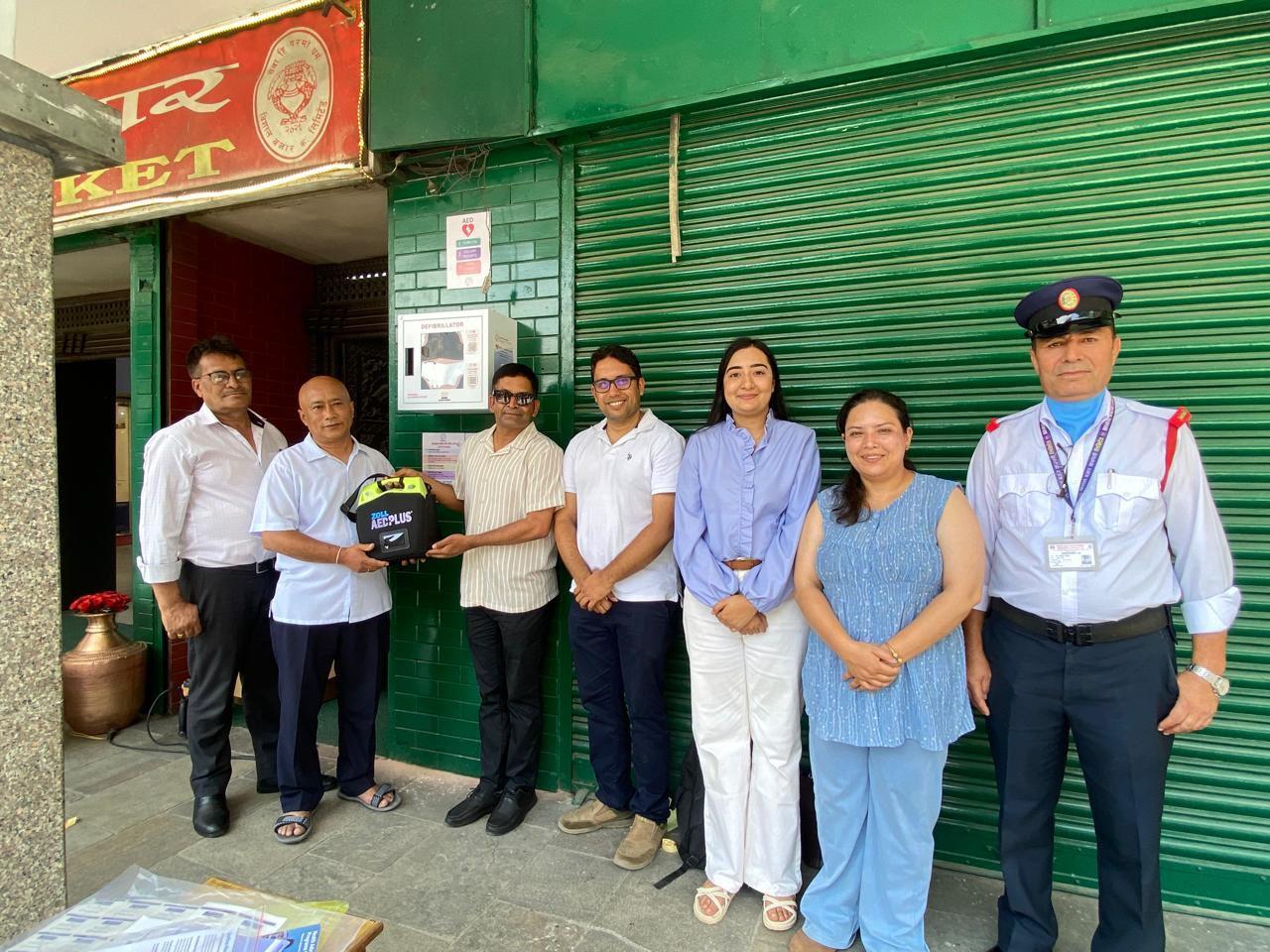
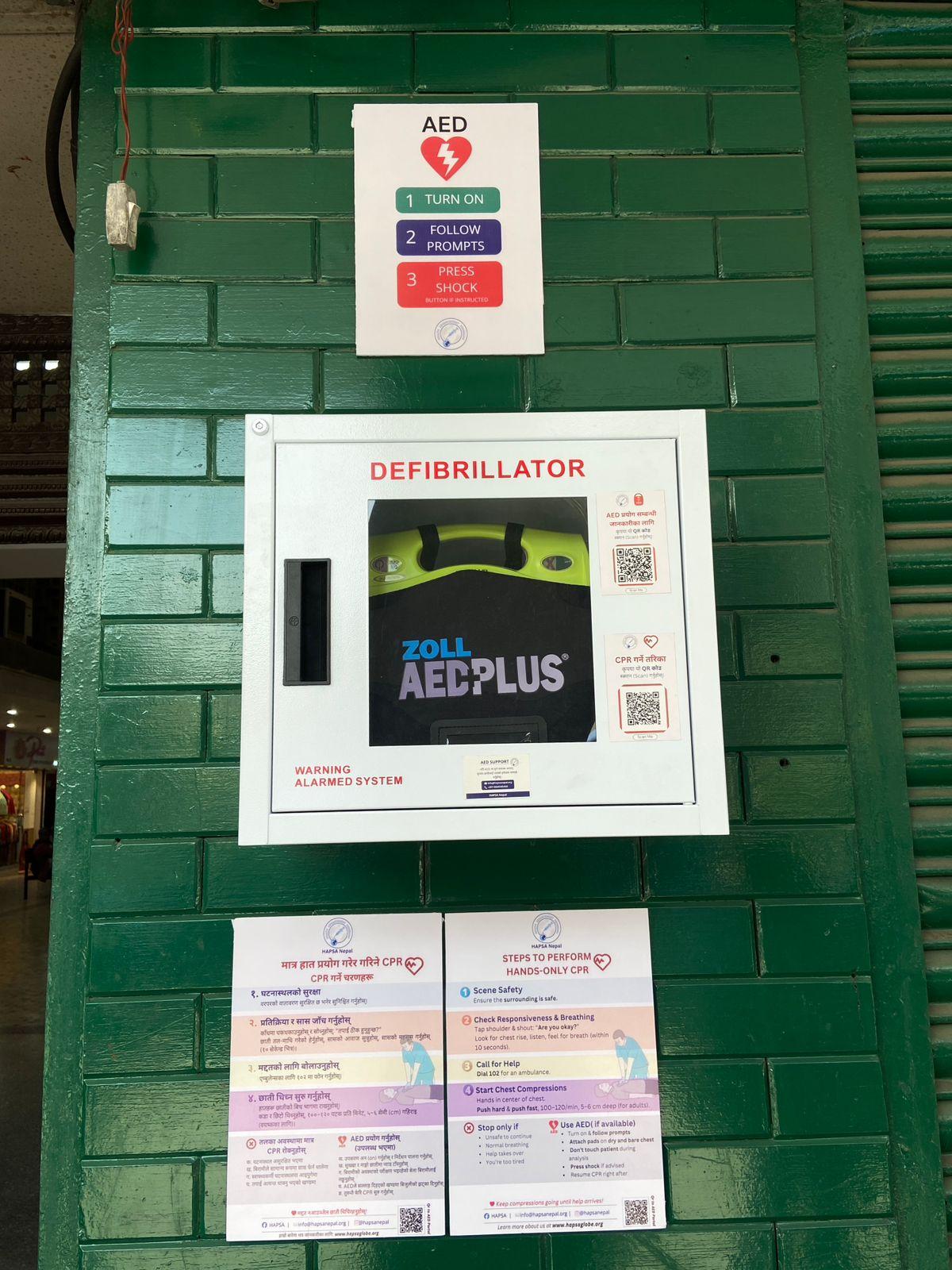
HAPSA NEPAL Installs Second Public AED at Bishalbazar Complex Under the Nepal Life Savers Program
The second Automated External Defibrillator (AED) installation has been completed at Bishalbazar Complex for public access. This initiative is a collaboration between HAPSA Nepal and Bishalbazar Complex authorities.